
Toshikoshi Soba
Japanese tradition: cooking and eating Soba noodles on new years eve.
Kei Tsuda
12/31/20251 min read
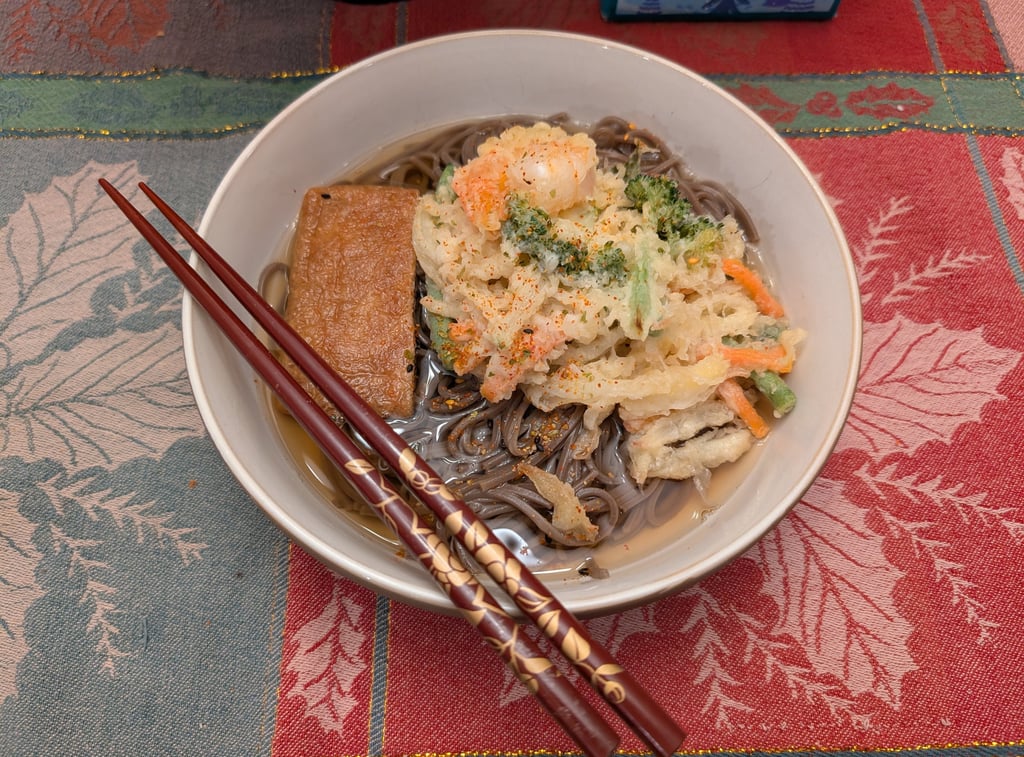
Even though I’ve been living in the U.S. for quite some time now, there are a few New Year’s Eve habits I’ve never let go of.
One of them is eating soba.
In Japan, Toshikoshi Soba is a humble dish. Long noodles symbolize continuity and resilience. The wish that life, like the noodles, will carry on smoothly into the next year. It’s not a celebratory feast, and it doesn’t try to be impressive. It’s something you eat at the very end of the year, almost as a pause.
This year, I made tempura soba while looking out at the snowy mountains of Vermont.
The setting was very different from where I grew up. No deep, resonant sound of a large temple bell (Joya no Kane) drifting through the cold air. Just snow, trees, and stillness. Yet, as I poured the hot broth over the soba and carefully placed the tempura on top, the feeling was surprisingly familiar.
That’s one thing I’ve come to appreciate about Japanese home cooking: it travels well.
Not because the ingredients are identical, or because everything is done “authentically,” but because the intention stays the same.
Toshikoshi Soba isn’t about perfection.
It’s about taking a pause and marking a thoughtful moment.
Looking back on the year that’s ending.
Letting go of what weighed you down.
And calmly wishing for steadiness in the year ahead.
Standing in a Vermont kitchen, watching steam rise from the bowl while snow continued to fall outside, I realized that this tradition has become part of my own ikigai. Not as something grand or dramatic, but as a small ritual that grounds me, wherever I am.
Different country.
Different landscape.
Different toppings.
Same bowl of soba.
And somehow, that’s enough.