Salt in Japanese Cooking
Same Salt, Different Pathways
Kei Tsuda
1/18/20263 min read
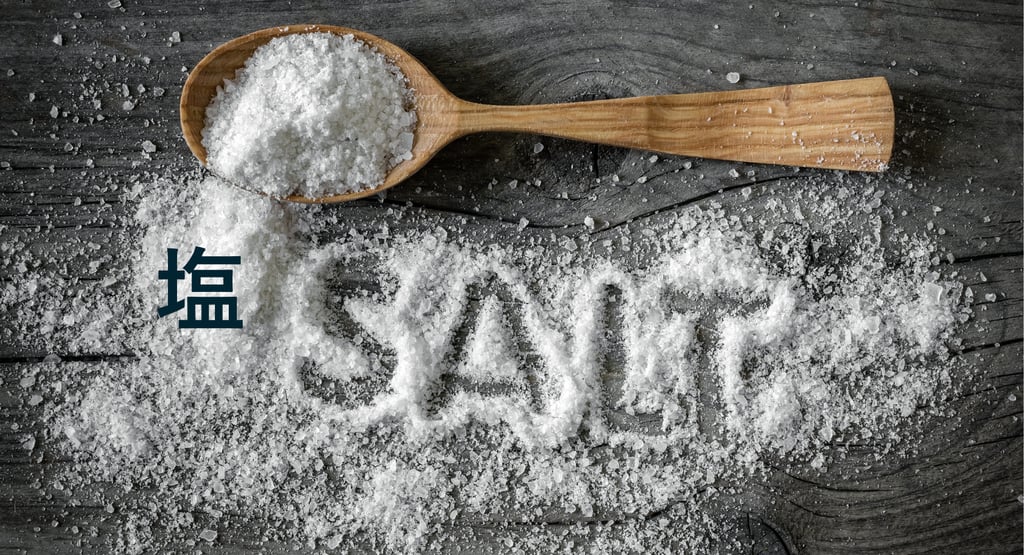
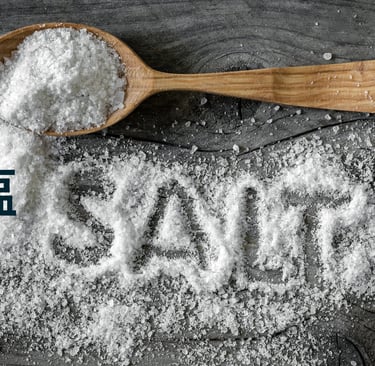
After writing about sugar in Japanese cooking, the next ingredient I wanted to explore was salt.
Not because salt is controversial — but because it’s misunderstood.
When people talk about salt and health, the conversation often turns tense.
Numbers, limits, labels, fear.
But when I started looking at the data more closely, something surprised me.
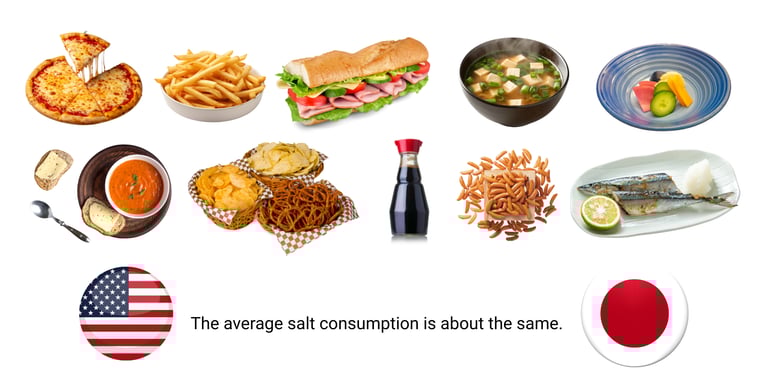
People in Japan and the United States consume roughly the same amount of salt each day.
The difference isn’t how much salt we eat.
It’s how salt enters our meals.
And that difference changes how food feels — and how much control we have as home cooks.
Same salt, different pathways.
In the U.S., most salt comes from foods that are already prepared:
bread, cheese, deli meats, pizza, soups, snacks, restaurant meals.
Salt is embedded upstream. By the time food reaches your plate, the choice has already been made.
In Japan, salt enters meals differently. Not primarily through table salt, but through:
soy sauce, miso, broths, pickles, snacks, salted seafoods, and fermented foods.
Salt is layered. Diluted. Spread across a meal rather than concentrated in one item.
That’s why Japanese food often tastes light or subtle —even when total sodium intake ends up being high.
The pathway is different. The experience is different. And most importantly, the role of the home cook is different.
Japanese cooking doesn’t remove salt — it builds flavor first.
One of the biggest misconceptions about Japanese cooking is that it’s “low salt.” It isn’t necessarily.
What Japanese home cooking does well is build flavor so that less salt is needed.
This happens through a series of techniques.
1. Dilution, not elimination
Many Japanese dishes rely on broth — dashi — as a base.
A small amount of soy sauce or miso seasons an entire pot of soup.
The salt spreads.
The flavor opens up.
Instead of concentrating salt in one bite, it’s distributed across many.
You’re not removing salt.
You’re changing its role.
2. Umami before salt
Dashi made from kombu or bonito adds depth before seasoning begins.
When umami is present, salt doesn’t need to work as hard.
The dish feels complete sooner.
This is why Japanese food can taste satisfying even when lightly seasoned.
Salt supports the flavor — it doesn’t lead it.
3. Dip, don’t pour
In Japanese, there’s a meaningful difference between:
kakeru — to pour
tsukeru — to dip
Instead of pouring soy sauce over food, you lightly dip.
The eater controls the amount.
Salt becomes intentional.
This small habit alone can reduce sodium without changing flavor.
4. Acid, aroma, and temperature
Japanese cooking often relies on:
vinegar, citrus, ginger, scallions, herbs, and warmth.
These elements wake up the palate.
They add contrast and clarity without sodium.
A hot dish tastes saltier than a cold one.
A splash of acid sharpens perception.
Again, flavor first — salt second.
Why this matters beyond nutrition?
In many health conversations, salt becomes an enemy.
Food becomes something to manage, optimize, restrict.
That approach may work for some people.
But for many, it turns everyday meals into a battleground.
Japanese home cooking offers a gentler alternative.
Salt isn’t something to fear.
It’s a tool — one that requires attention.
Cooking this way invites awareness:
How much is enough?
When is it supporting?
When is it overpowering?
These are not abstract questions.
They show up in small daily moments — exactly where ikigai lives.
Food as part of daily ikigai.
Ikigai isn’t something you chase.
It’s something you feel and practice.
In the kitchen, that practice looks like:
tasting as you go
adjusting gently
cooking with care for yourself and others
Not perfect nutrition.
Not zero salt.
Just balance.
When food supports daily life — not stress about health — it becomes sustainable,
Comforting, Human.
That’s the kind of cooking I aim for at Ikigai Japanese Home Cooking.
A small invitation.
You don’t need to overhaul your diet.
You don’t need to count milligrams.
Next time you cook, try one small shift:
dilute a sauce - use dashi of your choice,
build flavor before salting,
dip instead of pour.
Pay attention to how the food feels — not just how it measures.
That awareness, repeated daily, is often enough.