
Osechi Ryōri
Traditional dishes served on the first several days of January (new years) in Japan
Kei Tsuda
1/1/20262 min read
Winter has a way of slowing things down here in New England.
After the rush of Thanksgiving to Christmas, the days grow quieter. The kitchen becomes calmer. Time stretches a little.
In Japan, we have a New Year tradition called osechi.
It’s not a single dish, but a way of cooking that marks the beginning of a year. Unhurried, thoughtful, and rooted in season.
One of my strongest memories of osechi isn’t a finished meal, but the process.
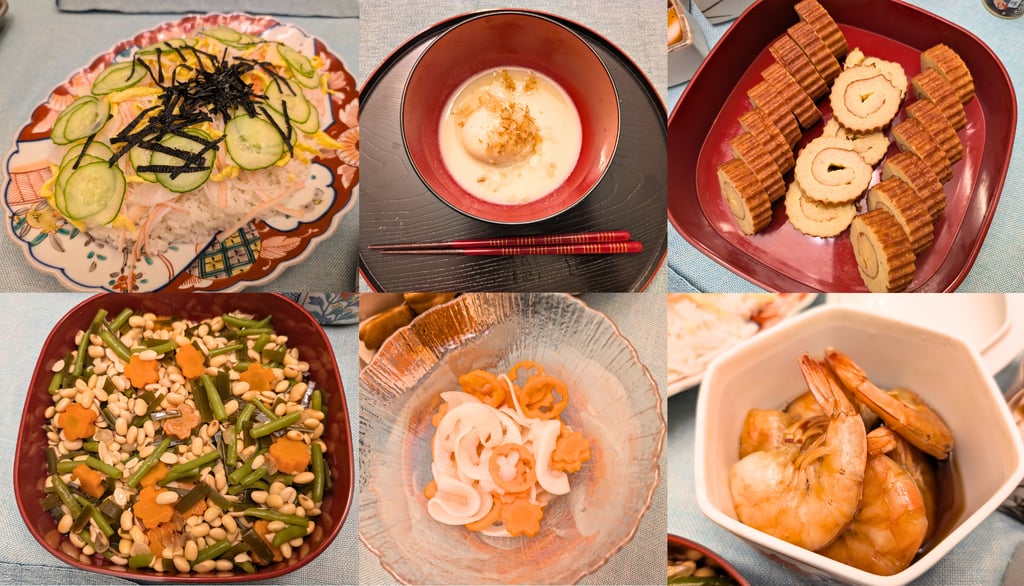
At the end of the year, we would make round rice cakes by hand. Later, they were grilled and dropped into a rich, slightly messy white miso soup. In a Kyoto-style ozoni. That bowl of soup is still a constant in my home today.
When I was in elementary school, New Year’s felt a little boring.
Stores were closed. There was nowhere to spend my otoshidama—the New Year’s money adults give to children. Online shopping didn’t exist. Looking back, time moved more slowly then. And maybe because of that, the moments that finally arrived felt more satisfying.
Osechi feels similar to me now.
As a child, I watched it being made. Later, I tried recreating it myself. First by memory, then with the help of recipes. In Japan today, you can pre-order beautifully prepared boxed osechi and have it delivered right on time. Here in New England, that isn’t really an option. So I cook what I can, myself.
Some dishes appear every year.
Ozoni, chirashi sushi, and datemaki (a lightly sweet rolled omelet) are regulars. Other items change from year to year, depending on time, energy, and how life feels that winter. That flexibility has become part of the tradition.
Osechi is also when I try things I don’t usually do, like decorative vegetable cuts. They’re not necessary, but they slow me down in a good way. It’s a small, meaningful kind of craftsmanship.
For me, osechi isn’t about having everything perfectly prepared or complete.
It’s about honoring time, making space for the year to begin gently, with care and intention. That spirit is at the heart of the Japanese home cooking I share here in New England - food that adapts to place, season, and the people gathered around the table.